

AI adoption has moved from discussion to execution
For B2B technology, finance and real estate leaders, AI adoption is now an operating decision. It affects how quickly a team can research markets, produce content, analyse competitors and progress software work.
The most useful signal is not a prediction. It is what teams are already reporting in delivery. In one investor portfolio of more than 200 businesses with £1,20M ARR, small teams of two to four people report a markedly higher level of execution across software, marketing and administration.
JJ also experienced an eight-month software development backlog being cleared in about two weeks using Claude Code AI agents. This is one firsthand example, not a blanket promise. Yet it gives CEOs, founders, CROs and CMOs a practical question to answer: where is work waiting simply because the team lacks time or specialist capacity?
Treat AI agents as capacity, not a side experiment
Claude Code AI agents are showing that non-technical users can direct work on complex tasks, including software development. That changes the relationship between marketing priorities and engineer capacity.
A growth team can no longer plan in isolation, then wait for engineering resources to become available. Equally, engineering should not be asked to automate a vague list of AI ideas. Start with the blocked work that has a clear commercial outcome.
For example, identify the backlog items that support customer acquisition, sales enablement, reporting or product communication. Define the expected output, the review owner and the decision each output will inform. Then test an AI-supported workflow against that specific task.
This approach keeps the work practical. It also helps leadership separate real execution gains from activity that merely looks innovative.
Build an AI marketing strategy beyond ChatGPT
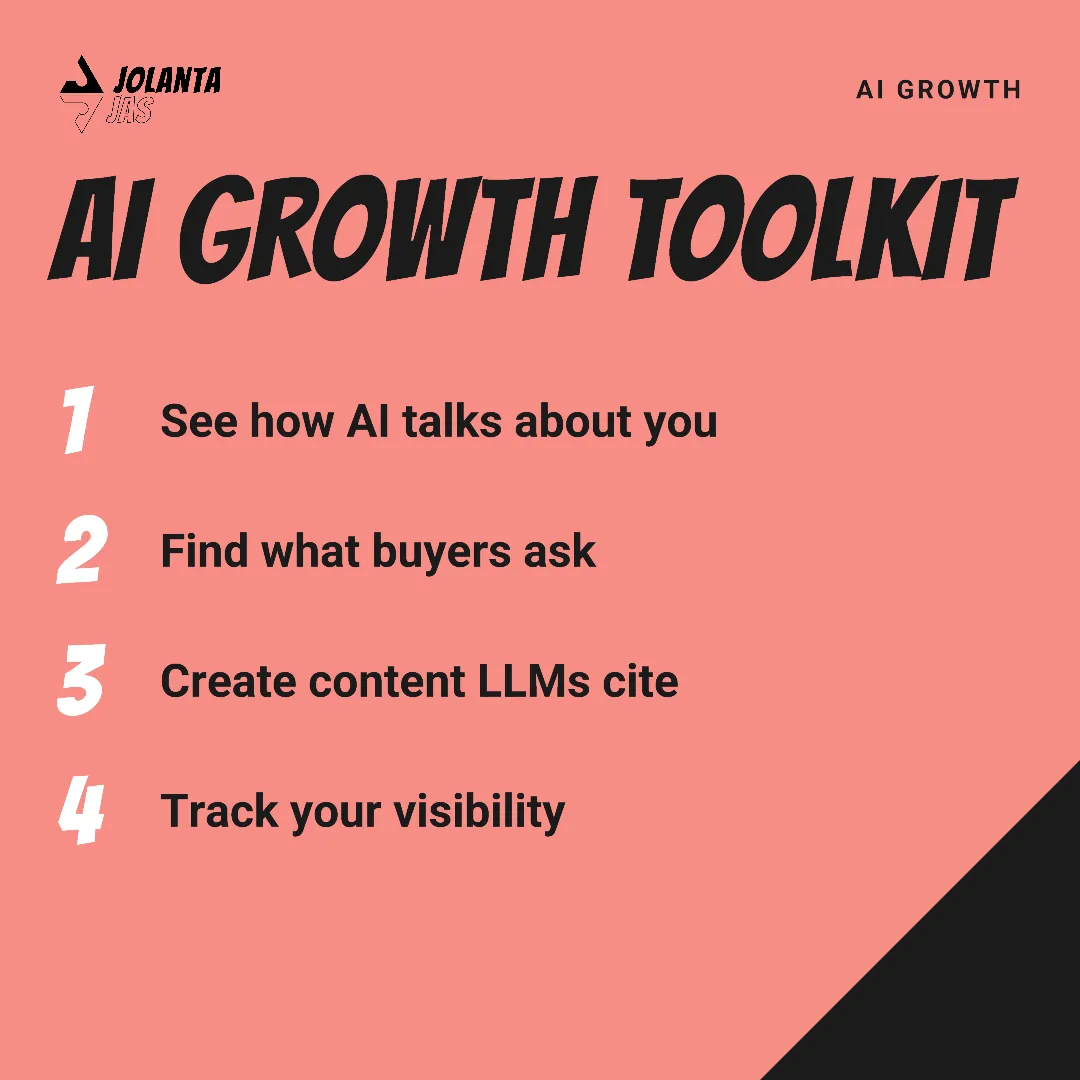
ChatGPT can be part of the workflow. It should not be the whole plan. A complete AI marketing strategy needs a view of how buyers use large language models (LLMs) to find and compare providers.
When a prospect asks ChatGPT or Perplexity for a recommendation, conventional search visibility alone may not determine which brands appear in the answer. Teams need to understand their current presence in AI search, the competitors being referenced and the content gaps that limit visibility.
The video guide, Best Tools To Build Your Own Growth Strategy in LLMs & AI, covers the tool stack used to plan, track and grow visibility in LLMs and AI search. It is designed to support the journey from a first audit to ongoing reporting.
The priority is not to publish more content without direction. It is to produce content that answers the questions buyers actually ask, then measure whether visibility changes over time.
Use evidence to set content priorities
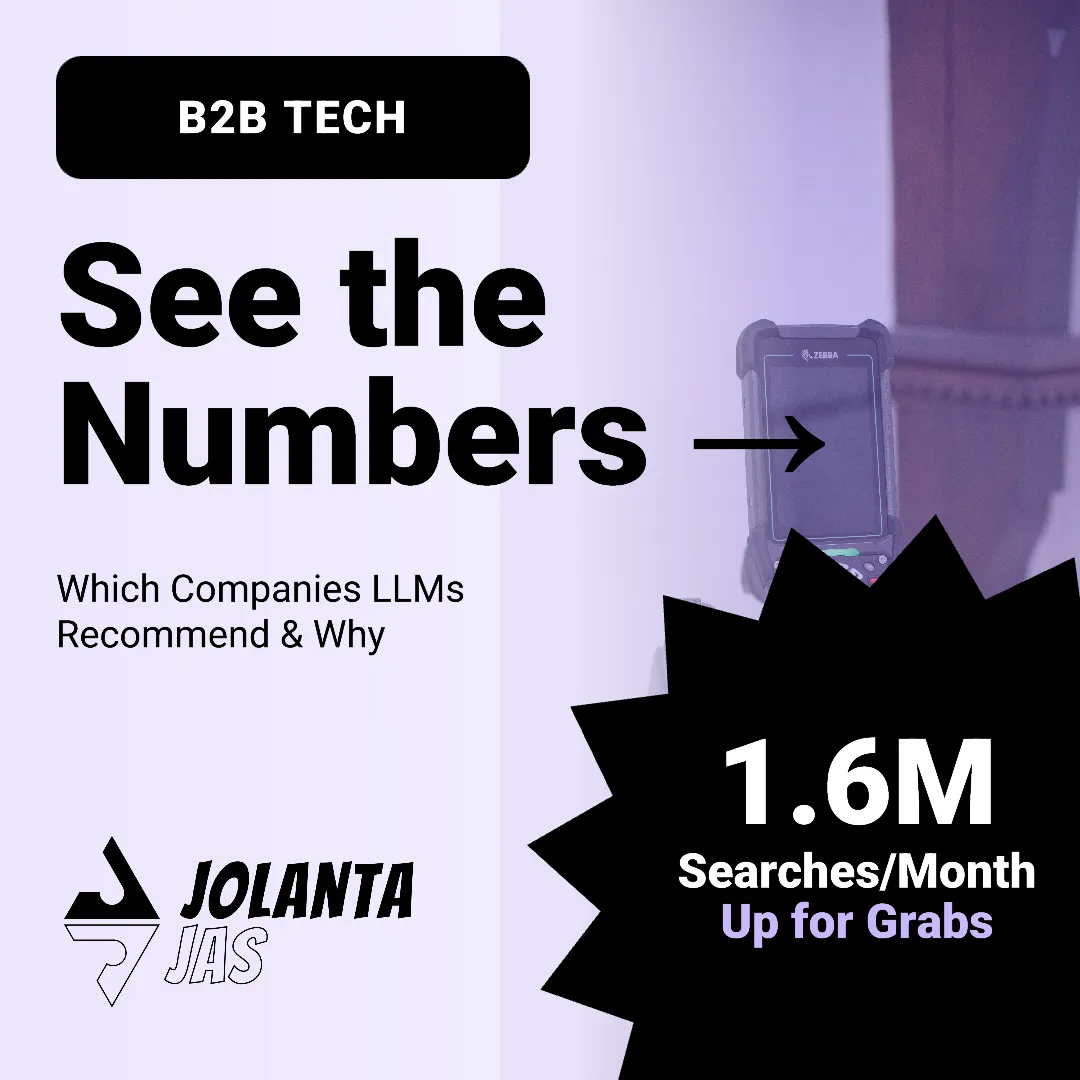
The available analysis illustrates why an LLM benchmark matters. Why Deloitte Owns the AI Answers for AI Training Providers reports that Deloitte has 23K pages of in-depth content and receives about 6.4K AI referrals a month. The report maps UK AI training providers that ChatGPT recommends, including The AI Works and Sky Potential, and identifies content gaps across 1M monthly searches, including 0.1M in the UK.
Its framework is direct: an LLM share-of-voice benchmark, competitor content gap analysis, priority keyword clusters and quick-win growth actions. These are useful inputs for deciding what a marketing team should build next.
The same method applies in other competitive categories. How Sprout Social Outranks Affiliate Marketing Platforms examines which platforms AI recommends to brands and the opportunity around 3.4M monthly searches. It uses the same four analysis components to turn AI-search visibility into a focused content plan.
Make 2026 a structured learning year
The goal is not to replace judgment with an AI tool. It is to equip teams to move faster while retaining clear ownership and review.
Start with one constrained engineering or marketing workflow. Document the baseline, test the new process, review the output and decide what to scale. In parallel, establish an AI-search benchmark so content investment follows visible gaps rather than assumptions.
For leaders building that plan, the How to Build a Complete AI Growth Strategy roundtable is scheduled for 15 April with growth leader Tommy, whose experience includes Meta, Empower and Victoria's Secret. It will focus on robust growth strategy. A separate Complete AI Growth Playbook draws on applied AI, agentic development and AI growth systems used with clients, including a global £2.5M ARR client.
The next advantage will come from disciplined adoption: better workflows, clearer measurement and a shared plan between AI marketing leadership and the engineer teams that make growth initiatives operational.